


Let me tell you—every time someone hits me with “Hey, how much to print some notebooks in China?” I just want to pull up a chair and say, “Okay, sit down. This is gonna take a minute.”
Because there’s no magic number. You can get quotes from ten different factories and end up with prices all over the map—one guy says $1.50, another throws out $6, and you’re left wondering who’s trying to pull a fast one. Spoiler: nobody is. It all comes down to what you actually want.
Printing notebooks from China is a lot like ordering coffee. You can grab a basic drip for cheap, or go full latte with extra shots and fancy foam. Same product category, totally different experience—and price tag.
Real-World Examples to Give You a Feel
Let’s skip the fluff and look at some actual scenarios I’ve seen (or that match what factories are quoting right now in 2026):
- A company ordering 300 employee notebooks — A5 size, around 200 pages, soft PU leather cover with a simple logo. Landed around $5–6 each.
- A government-style bulk order of 200 meeting notebooks — basic softcover, nothing fancy. Closer to $1.50–2 per book.
- A big organization printing 3,700 learning notebooks — high volume, straightforward design. Dropped below $1.50 each, sometimes even lower.
See? Same “custom notebook” idea, but the price swings wildly because the specs do. So before you even ask “how much?”, figure out what kind of notebook you’re actually after.
The 5 Big Factors That Decide Your Price
Here’s the stuff that really moves the needle. Keep these in mind when you’re getting quotes—they’ll save you a ton of back-and-forth.
- Quantity — This is the biggest one, hands down The golden rule in printing: the more you order, the cheaper each one gets. Setup costs (plates, machine calibration, etc.) get spread out.Rough 2026 ballpark for a decent A5 notebook:
- 50–100 books: $3–6+ each (small runs hurt)
- 200–500 books: $2–4 each
- 1,000+ books: $1.20–2.50 each
- 5,000+: Often under $1.20, sometimes dipping toward $0.80–1.00 on super basic versions
- Cover Material — Where a lot of the money goes The cover is basically the “face” of your notebook and can eat up a third or more of the cost.From cheapest to pricier:
- Laminated paper cover: Budget-friendly, fine for promo giveaways
- PP plastic: Tough and cheap
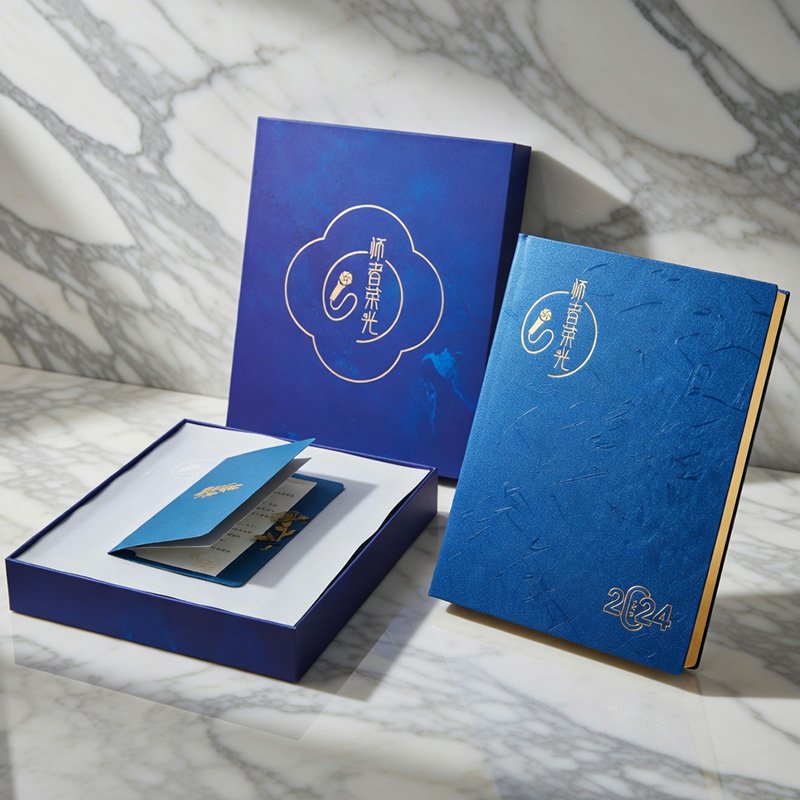
- PU leather (faux leather): The sweet spot for business feel—looks premium without breaking the bank
- Hardcover with special paper or fabric: Big jump in quality (and price)
- Real leather or exotic stuff: Only for true luxury orders
- Inside Pages 80gsm paper is the everyday standard—writes nicely and keeps costs reasonable. Bump it to 100gsm or 120gsm and you’ll feel the difference (and pay a bit more, maybe 30–80 cents extra per book). More pages = higher price, obviously. 80 pages versus 200 isn’t even close.
- Binding Style
- Saddle stitch (stapled): Cheapest, best for thinner books
- Perfect binding (glued): Most common, affordable
- Sewn binding: More durable, lays flat better—costs extra
- Hardcover sewn: Top-tier feel, but you’ll pay for it
- Printing and Special Finishes Simple one-color logo on the cover? Usually cheap or even included. Full-color insides, heavy foil work, or fancy textures? That pushes the price up. But these details are often what make your notebook feel special instead of generic.
Quick Reference Price Ranges (2026 China Sourcing)
Here’s a realistic table based on current factory quotes for typical A5 notebooks:
| Quantity | Basic Config (e.g. soft/PU cover, simple logo) | Premium Config (hardcover, foil, better paper) |
|---|---|---|
| 50–100 pcs | $3–6 per book | $6–9+ per book |
| 300–500 pcs | $2–4 per book | $4–6 per book |
| 1,000 pcs | $1.20–2.50 per book | $2.50–4 per book |
| 5,000+ pcs | $0.80–1.50 per book | $1.50–3 per book |
These are ballpark figures including basic customization but not shipping, taxes, or duties. Super-low quotes you see online (like $0.50) are usually for massive runs with minimal features.
How to Get Accurate Quotes (Don’t Waste Everyone’s Time)
Don’t just message a factory saying “How much for notebooks?” That’s like asking “How much is a car?”
Give them the details upfront:
- Size (A5 is the sweet spot for most people)
- Number of pages
- Cover material and finishes (PU? Foil? Emboss?)
- Inside paper and ruling (lined, dotted, blank?)
- Quantity
- Any extras (elastic band, pen loop, bookmark, inner pocket?)
The clearer you are, the better (and faster) the quote.
Money-Saving Tips That Actually Work
- Stick to standard sizes like A5 or B5—factories have the paper and templates ready, so less waste.
- Make your page count a multiple of 16 or 32—it lines up better with how printing presses work.
- Spend where it shows: A nice foil logo on the cover is worth it. Fancy inner paper that nobody notices? Maybe skip it.
- Always get physical samples. That $30–50 you spend on a proof can save you thousands if the color is off or the binding feels cheap.
Straight Talk at the End
Custom notebook printing in China can cost anywhere from under a buck to ten-plus dollars per unit. Expensive doesn’t always mean you’re getting ripped off, and dirt-cheap doesn’t mean it’s junk—it’s all about matching the product to your goal.
If you’re building a brand and giving these to clients or VIPs, don’t cheap out on the cover. That extra dollar or two on PU leather and a clean foil stamp makes a huge difference in how people perceive you.
If you’re a creator or small brand testing the waters, start with a smaller digital/print-on-demand run (even 50–100) to keep risk low.
If it’s for internal team use or big promo campaigns, lean into higher quantities with a solid factory and watch the unit price drop.
Bottom line: Stop obsessing over the absolute cheapest price. Figure out what your notebook needs to do and feel like, then shop smart. Calculate the total cost, not just the per-unit number.
Got a specific project in mind—size, quantity, or features? Drop the details in the comments and I’ll help you think through realistic numbers or what to watch out for when sourcing from China.
Printing notebooks doesn’t have to be mysterious. Once you know the levers, it’s actually pretty straightforward.