


What every publisher should inspect before signing off on a big shipment
Let me tell you a story that still makes me wince. A publisher friend ordered 8,000 hardcover children’s books from a factory overseas. The first couple of pallets looked fine at the warehouse, so he signed the receipt and paid the balance. Two weeks later, distributors started complaining — nearly 2,000 copies had crooked spines and foil stamping that was off by 3 millimeters. He tried to claim against the factory, but the contract said “signed = accepted.” In the end, he had to reprint those 2,000 books plus pay shipping both ways. Total loss? Almost $10,000.
He wasn’t cheated — he just didn’t know exactly what to look for during inspection. Publishers and large-run buyers face bigger risks than indie authors. One bad book is annoying; hundreds of bad ones can trigger returns and damage your reputation.
After years on the floor helping clients, I put together these 7 practical checkpoints. They’re not fancy ISO standards — just the everyday issues we see most often in the shop. Follow them and you’ll catch over 90% of potential problems.
1. Color Consistency — Your Eyes Alone Aren’t Enough
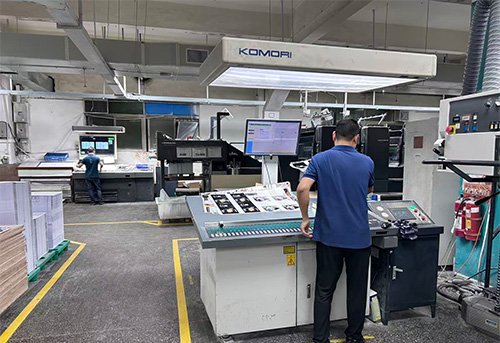
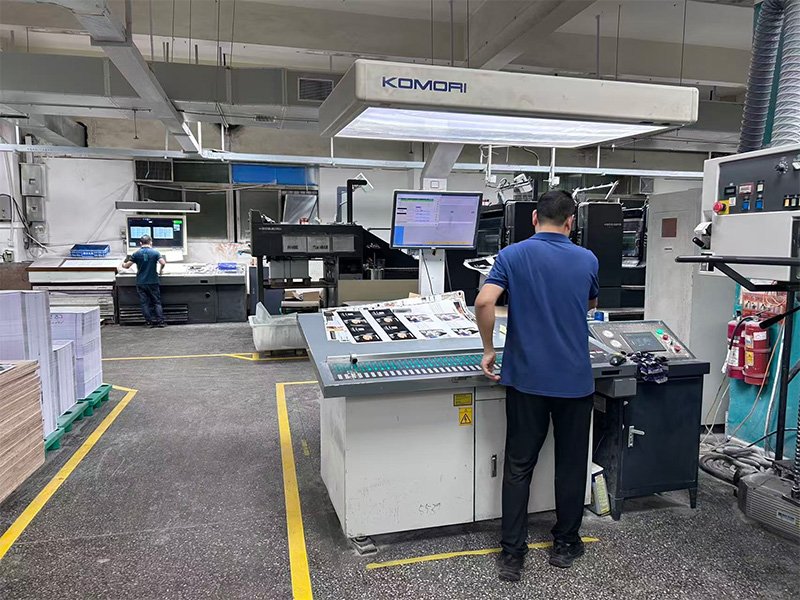
You’ve probably seen it: the proof looks beautiful, but the bulk run arrives with muddy reds, gray skin tones, or dull blues. It’s usually not intentional — the press just didn’t hold the same ink density as the proof.
Human eyes are unreliable for color, especially under different lighting. Factory workers who’ve been staring at sheets for hours get color-blind fast.
How to check: Ask for a color control bar (that strip of color patches printed on the edge of every sheet). Pull a few random books and look for any sudden jumps in the patches. If the factory didn’t even print the control bar, that’s a red flag.
For critical jobs like art books or photo-heavy titles, randomly pull 10 copies and ship them back to the factory for ΔE measurement with a spectrophotometer. ΔE under 2 is nearly invisible to the eye; under 3 is usually acceptable. Get the report in writing.
2. Spine Quality — The Weakest Spot in Any Book
The spine takes the most stress, yet problems often hide until readers start flipping pages.
Common issues include bubbling (air pockets under the cover material), crooked text or artwork, and cracking at the joints that gets worse with use.
How to check: Pull 10 books from different pallets. Do three quick tests on each:
- Lay the book flat and check if the spine title lines up perfectly with the front cover.
- Open to the center and look for cracks or white lines at the joints.
- Gently twist the spine ends and listen for creaking (a sign of insufficient or under-cured glue).
If 2 or more books show clear problems, flag the whole shipment.
3. Page Order and Signatures — One Wrong Page Ruins Everything
This mistake is rare, but when it happens it’s catastrophic. I once saw a novel batch where 20 pages were accidentally replaced with content from a completely different (and very adult) book.
How to check: Use a quick “skip-check” method. Pull 20 books from different pallets. Flip to three spots in each: right after the title page, the middle (e.g., page 125 in a 250-page book), and near the end. Make sure page numbers are correct and the text flows logically.
For extra peace of mind, ask the factory to send a short video of the book blocks before binding so you can see the page numbers running sequentially along the side.
4. Trim Size and Edges — Even 1mm Off Matters
After printing, books go through a three-knife trimmer. If the blade is misaligned or dull, you get uneven margins, cut-off text, or wavy edges.
How to check: Bring a rigid 6-inch steel ruler (not a flexible tape). Measure 10 random books: height, width, and text margin from the edge. Tolerance should stay within ±1.5mm. Also run your fingers along the fore-edge — it should feel smooth, not rough or wavy.
5. Lamination and Foil Stamping — They Look Great Until They Fail
Lamination (gloss or matte) and foil stamping add that premium feel, but they can bubble, peel, shift, or rub off.
How to check:
- For lamination: Scratch gently at the edge with a fingernail and rub the surface with your finger to feel for bumps or lifting.
- For foil: Wipe lightly with a white tissue to check for rub-off, then gently pick at the edge. Shine a phone flashlight from the side to spot uneven pressure.
Do this on 10 books. Any consistent failure means the whole batch needs attention.
6. Packaging — Don’t Let the Books Arrive Already Damaged
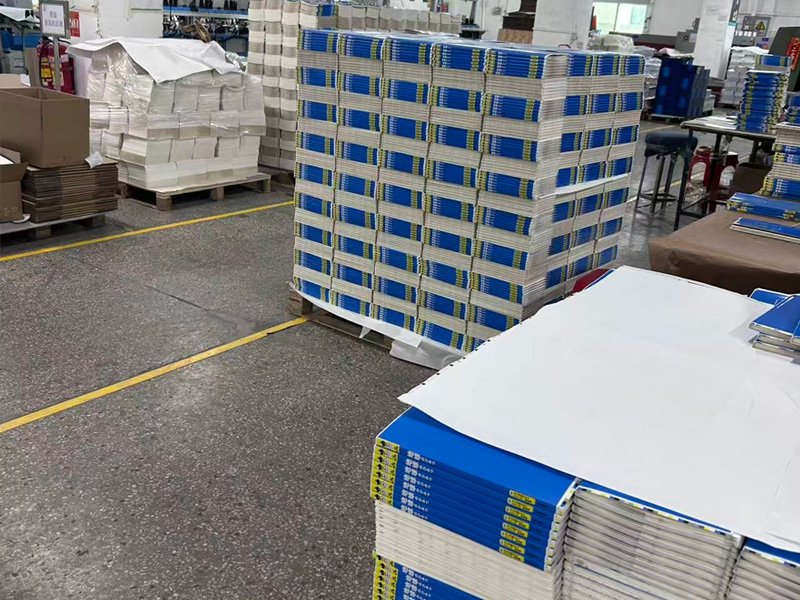
Sometimes the real damage happens during ocean transit. You sign off, but the container ride turns perfect books into warped or moldy stock.
How to check (before shipment): Require the factory to send three short videos:
- Pallets wrapped in moisture barrier film with no shifting.
- Books packed in sturdy 5-layer corrugated cartons with corner protectors.
- Full pallets stretch-wrapped multiple times with strapping.
For valuable hardcover or children’s books, insist on desiccant packs inside each carton. It costs pennies but prevents condensation damage from temperature swings at sea.
7. Sampling Size — How Many Books Should You Actually Check?
Many contracts mention AQL standards, but warehouse teams rarely have time to calculate them on the spot.
Simple practical rule: Take the square root of your total quantity as the minimum sample size.
- 1,000 books → check at least ~32
- 3,000 books → check at least ~55
- 5,000 books → check at least ~70
Pull evenly from different pallets. Run all six previous checks on these samples. If more than 5% show defects, pause acceptance, document everything with photos and video, and negotiate with the factory or bring in a third-party inspector.
Final Tip When you find issues, stay calm but firm: take clear photos, keep samples, and communicate with evidence. Most responsible factories will work with you to fix problems rather than lose a client.
Catching these seven points during book printing quality control can save you thousands and protect your reputation. If you’re about to receive a large shipment and want a second pair of eyes on your specs or checklist, just send me the details. I’ll help you walk through exactly what to watch for.